
lets fill the gap
Whether you’ve recently lost a tooth or have been living with a gap for some time, there are several ways we can restore your smile.
The right option depends on where the gap is, the health of the surrounding teeth and gums, your bite, and what matters most to you. We’ll talk you through the possibilities and help you choose an option that feels right for you.
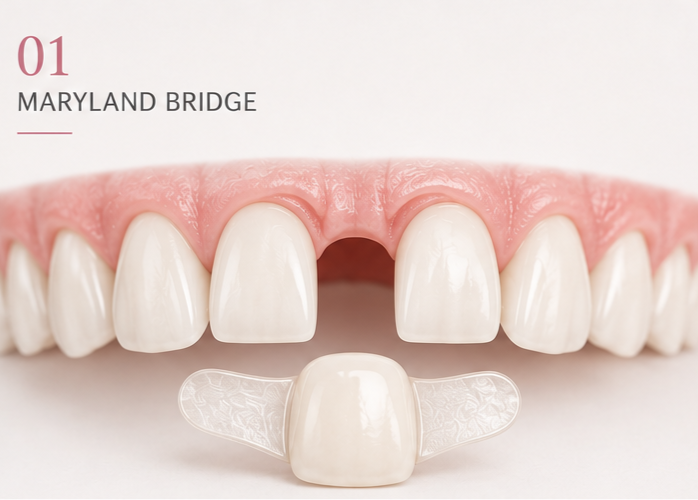
Maryland Bridge
A conservative way to replace a missing tooth
A Maryland bridge — also known as a resin-bonded or adhesive bridge — uses a replacement tooth with a small “wing” that is bonded to the back of a neighbouring tooth.
One of its biggest advantages is that it usually requires little or no preparation of the supporting tooth, making it a beautifully conservative option when the circumstances are right.
It may be worth considering if: you're replacing a suitable single tooth and the neighbouring tooth is healthy.
Good to know: Maryland bridges aren't suitable for every gap or every bite. Your dentist will assess whether this type of bridge is likely to provide a predictable result for you.
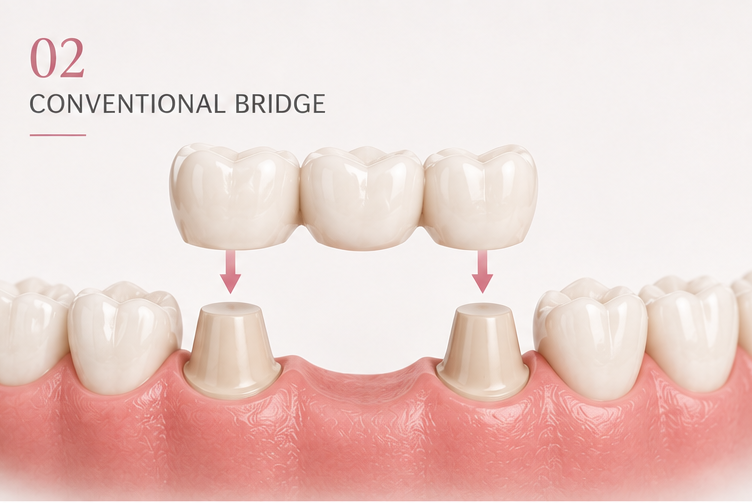
Conventional Bridge
A fixed solution using the neighbouring teeth
A conventional bridge literally “bridges” the gap. A replacement tooth is joined to crowns which are supported by one or more neighbouring teeth, creating a restoration that stays permanently in your mouth.
Unlike a Maryland bridge, the supporting teeth usually need to be shaped to accommodate the crowns. This can make a conventional bridge particularly worth considering when those teeth already have large fillings or crowns and would benefit from restoration anyway.
The advantages: fixed, natural-looking and no surgery.
Things to consider: preparation of the supporting teeth is irreversible, so we'll always consider the condition of those teeth carefully before recommending this option. Conventional bridge preparation also carries a risk of damage to the nerve of a supporting tooth
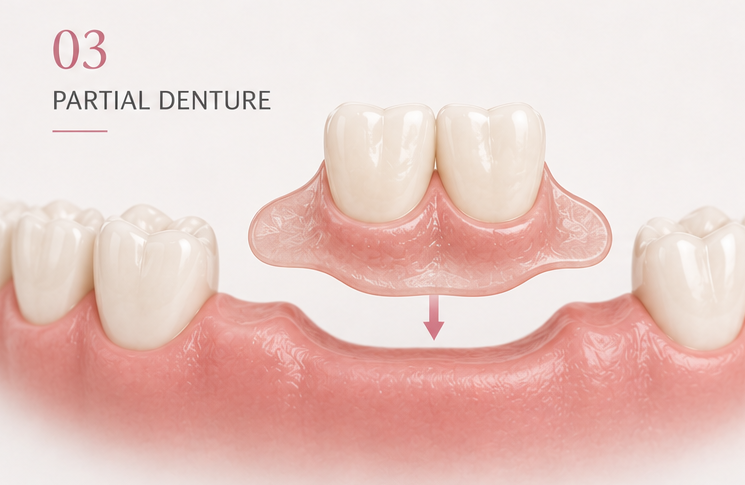
Denture
A removable and versatile option
A partial denture can replace one tooth or several missing teeth using a custom-made removable appliance that sits comfortably within your mouth.
Modern dentures can be surprisingly discreet and are often a useful option when several teeth are missing, when a fixed bridge isn't suitable, or when someone would prefer to avoid implant surgery.
The advantages: can replace several teeth at once, no surgery required and usually a more accessible option than implant treatment.
Things to consider: unlike a bridge or implant, a denture is removable and can take a little time to get used to. It also needs to be removed for cleaning
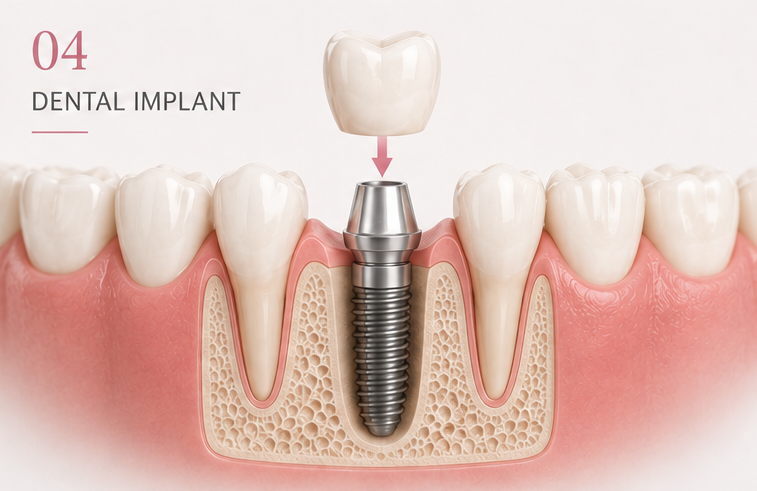
Dental Implant
The closest thing to replacing the whole tooth
A dental implant replaces the missing root as well as the visible tooth. A titanium implant is placed into the jawbone and, once healed, is used to support a natural-looking crown.
One of the major advantages is that an implant can replace a missing tooth without needing to prepare the neighbouring teeth. Implants can be used to replace a single tooth or to support bridges and dentures when several teeth are missing.
The advantages: fixed, independent of the neighbouring teeth and designed as a long-term solution.
Things to consider: implant treatment involves surgery and a period of healing, and there needs to be sufficient healthy bone and gum tissue. Occasionally additional procedures such as bone grafting may be recommended.
Not sure which option is right for you?
You don't need to decide before you come to see us.
We'll assess the gap, the surrounding teeth and gums and talk through the options that are appropriate for your mouth. We'll explain the advantages, limitations, treatment involved and costs clearly, so you can make a decision you're completely comfortable with.
Do I always need to replace a missing tooth?
Not necessarily. Every mouth is different, and sometimes leaving a space may be a perfectly reasonable option. Your dentist will explain whether replacing the tooth would offer a benefit in your particular case.